
Navigation
Before modern radar, rotating beams and fog signals marked safe channels, shoals, and harbor entries for cargo steamers and fishing fleets.
About the Northern Coast Lights
For more than a century, lighthouse stations along the northern coast shaped how ships approached dangerous waters, how communities interpreted storms, and how isolated keepers lived at the edge of land and sea. Today, these towers remain practical landmarks and historical records of maritime life.
Navigation
Before modern radar, rotating beams and fog signals marked safe channels, shoals, and harbor entries for cargo steamers and fishing fleets.
Weather
Keepers recorded wind, tide, visibility, and storms in daily logs, creating long local records that now support coastal climate and shipping research.
Isolation
Many stations operated in remote conditions where families balanced strict routines, maintenance labor, and periods of severe winter separation.
Preservation
Conservation groups and local archives stabilize towers, catalog photographs, and preserve keeper records so each site remains readable as shared heritage.
About the coast
From first construction campaigns to modern preservation work, these five eras show how beacons moved from urgent navigation infrastructure to protected heritage landmarks.
1810–1845
Stone towers were raised near hazardous headlands to reduce winter wrecks on expanding trade routes.
1846–1890
Fresnel lens adoption increased range and consistency, reshaping keeper routines around precise maintenance cycles.
1891–1935
Fog alarms, supply piers, and linked station management turned isolated towers into a coordinated coastal system.
1936–1975
Electrification and remote controls reduced resident staffing while preserving key safety duties during storms.
1976–Present
Conservation teams stabilized surviving towers and opened records, photos, and oral histories to wider audiences.
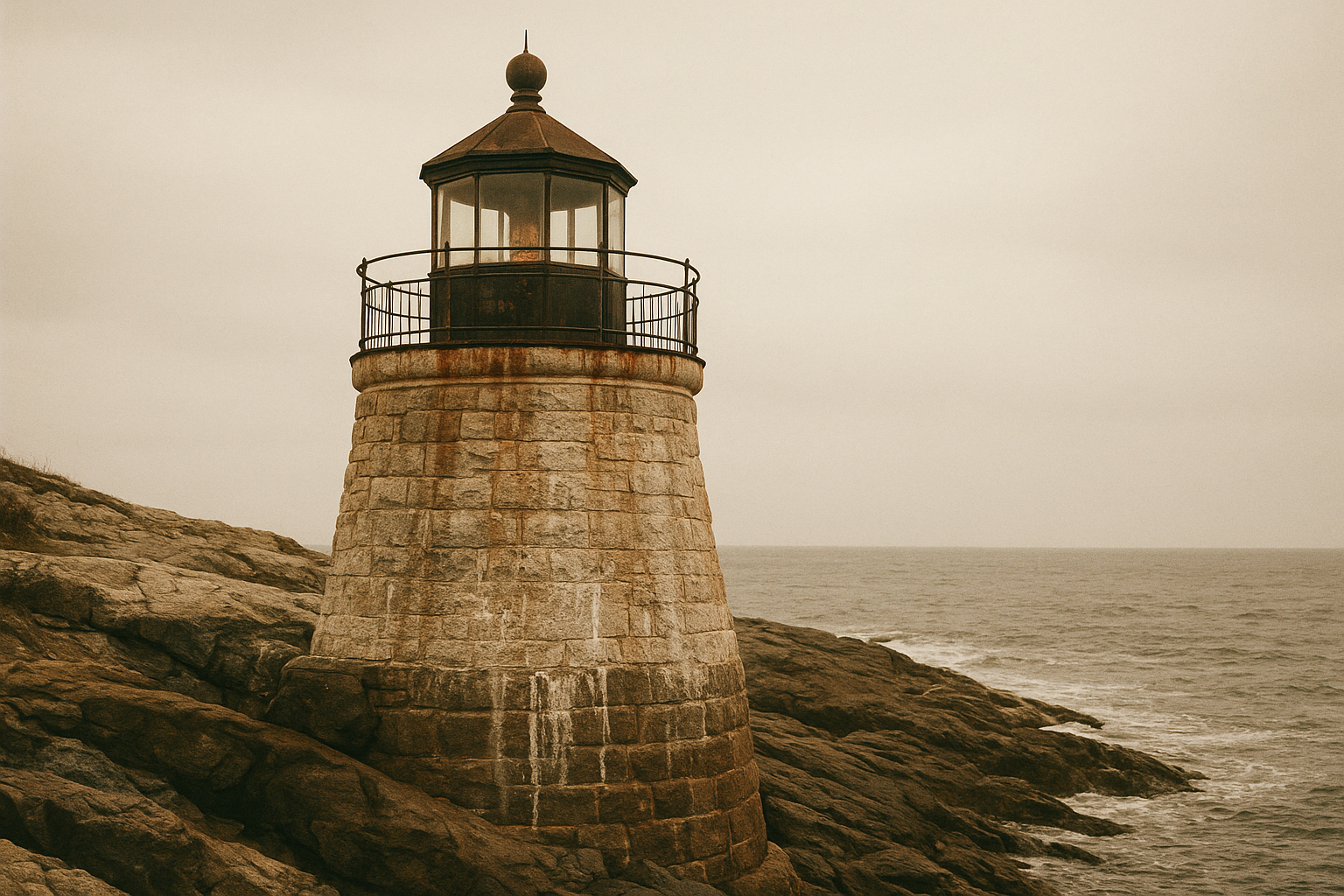
Preservation today
Along the northern coast, surviving lighthouses continue through careful upkeep rather than nostalgia: routine repairs, documented materials, and community memory keep these structures legible for future research and public understanding.
Endurance depends on salt-resistant masonry work, roof integrity, and controlled drainage around foundations.
Maintenance logs and restoration records preserve technical continuity between past keeper practice and present conservation.
Interpretive signage and oral histories connect material repairs with lived memory from surrounding coastal communities.
Local heritage groups and municipal partnerships provide the practical framework that keeps preserved towers publicly meaningful.